Look what I found on Quark Expedition website!
http://www.blogyourwaytoantarctica.com/blogs/view/257
In a nutshell, Quark is sponsoring a competition to send someone on an eco-cruise of Antarctica in order to blog for a week. The Fossil Huntress apparently threw her hat in, and I think any of her readers here would agree that she'd do a kickass job of blogging from Antarctica.
But naturally, the competition is a bit more of a popularity contest than a merit-based blogging appointment; you have 300 words in which to pitch yourself, but nobody besides your friends has any incentive to visit your entry page. (I'd wanted to enter myself, but then I remembered that I have no friends.)
's Recommended Blogs
[x]
hasn't added any blog recommendations yet.
1
Blogs Instructions
's Recommended Books
[x]
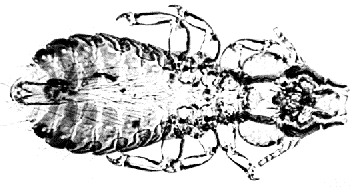
Parasite Rex
Books Instructions
's Affiliates and Organizations
[x]
hasn't added any organizations or groups yet.
1 Badges Instructions

Comic books have warned us time and time again to keep villains away from radiation. It only makes them stronger. Researchers at University of Delaware have discovered that ultraviolet radiation from the sun increases the plant-destroying powers of the common reed, making it an invasive archnemesis to its wetland plant victims.
At the opening of last week’s Nobel Laureate symposium, US Energy Secretary Steven Chu endorsed a low-tech tool to keep climate change at bay: white paint. According to Chu’s colleague Art Rosenfeld, lightening our planet’s dark roofs and roads would be enough to offset the carbon emissions of cars for the next 11 years.
I’m fascinated by the contributions of researchers outside of the mainstream— the monk whose bean garden seeded modern genetics, the bicycle mechanic brothers who built a flying machine in their garage, and all of those amateur stargazers who found supernovae in their favorite corner of the sky.
Modern indie researchers, often called "grassroots scientists" or “citizen scientists”, make especially good food for thought when grad school is at its most frustrating. It’s comforting to remember that at its heart, science is still open to anyone with a bit of curiousity and good observation skills.

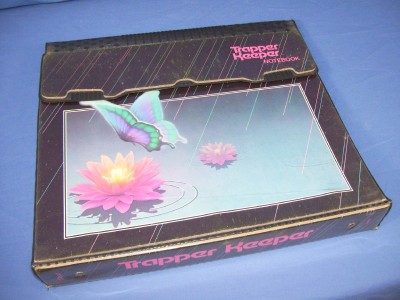
Like dolphins and unicorns, butterflies exist mostly to show artists what to draw on Trapper Keepers. As such, you wouldn’t expect there to be a major difference between the genders. Natural selection should be working hard to keep all butterflies at maximum cuteness. Yet selection giving the males a slight advantage in the arms race to the Lisa Frank drawing board, and scientists want know why.
The “Holy Grail of Climate Change" press release about biomaterial found in Wyoming clouds has been making its way across the internet like a steady front.
Before the days of mandatory underseat pet carriers, my airline colleagues received a call from a woman who needed to bring her therapy pet, a pig, on a flight. The airline didn’t see a problem, since Vietnamese pot-bellied pigs are about the size of dogs and just as well behaved. However, the animal that the woman showed up with was no potbellied pig. On the day of the flight, the woman showed up with a 300 pound barnyard pig on a leash. The pig took up the entire aisle, calmly sleeping through the flight.
Last week we found out that Merck paid Elsevier to publish a fake peer-reviewed journal. This week we found out that Elsevier produced five other pay-for-publication journals. The names of the journals haven't been disclosed, but Elsevier is conducting an "internal review".

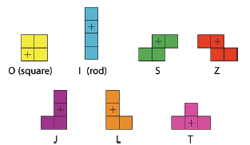
Tetris stole hundreds of hours of our lives. It’s about time it starts giving back. Researchers at the Washington University of St. Louis have built a computer simulation that uses a modified Tetris game to explore self-assembly. Their take on the classic puzzle game confirms what Tetris junkies have always known: The T-shaped tetromino is insanely versatile, and the L and Z tetrominoes just can’t get along.
A couple of entomologists at Arizona State have done what NASA famously failed to do: name a thing after Stephen Colbert. The Agaporomorphus colberti diving beetle joins the ranks of Colbert’s many namesakes: the Aptostichus stephencolberti trapdoor spider, the Diamphipnoa colberti stonefly, and just about everything else that needed naming in the last few years.
This Colbert-named arthropod series is in good company. There is a wealth of homage, wordplay, and good ol’ scientist shenanigans hiding beneath the latinized genus and species names of formal biological nomenclature. Here are a few highlights.