




Who knew the cute koala bears were so promiscuous?
Professor Peter Timms from QUT's Institute of Health and Biomedical Innovation said chlamydia in koalas was a significant cause of infertility, urinary tract infections, and inflammation in the lining of the eye that often led to blindness.
"The numbers of koalas with chlamydia seems to be increasing," he said.
The first Australian trials of a vaccine developed by Queensland University of Technology that could save Australia's iconic koala from contracting chlamydia are planned to begin later this year.
"The trial is planned to begin before the end of the year and will test the vaccine's ability to induce a good immune response in the koala against chlamydia," he said.
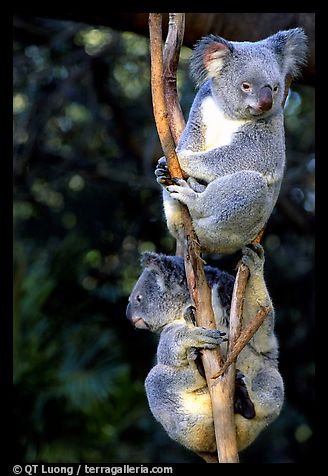
"Assuming that this first trial is successful, then future trials can determine if this immune response is able to protect the koalas against chlamydial disease.
"We've been able to develop the vaccine for koalas as a result of our studies on the development of human chlamydial vaccines done in the mouse model. We have identified several novel vaccine proteins that we hope will protect koalas as well."
"As much as 40-50 per cent of koalas coming into care in both Queensland and NSW are showing clinical signs of the disease and it seems to be getting worse."
The vaccine will be administered to a small number of koalas via an injection either under the skin or intramuscularly.
"The first phase of the trial will run for between six and 12 months," he said.
"We will have initial results within the first six months but we will continue to monitor the koalas for 12 months to determine how long the vaccine stimulates an immune response in the koalas and whether or not a booster shot is required.
"There is no danger that a koala without chlamydia will contract the disease from the vaccine."
Professor Timms said the vaccine trial was a significant step in the right direction in fighting the threat of chlamydia in koalas.
QUT's koala vaccine team also includes Professor Ken Beagely and PhD student Asad Sukar.
"While we have funding for the initial trial we are hoping to attract additional financial support for us to be able to continue this important work," he said.
"We seem to be doing good science but we need more funding. We are looking for corporate or individual support to fund further research in this area."
Professor Timms said by investing in chlamydia research, people were giving hope to the future survival of koalas.
Source: Queensland University of Technology



Comments