In 1989, the Russian chess champion Garry Kasparov easily defeated the computer Deep Thought (name drawn from the Douglas Adams book). In 1997 Deep Blue kicked his ass, spawning accusations of cheating (which IBM denied). In a million-dollar rematch in 2003, Kasparov fought Deep Junior to a draw.
If, as Marcel Duchamp said, chess has “all the beauty of art and more,” do Kasparov’s break-even results mean that computers have drawn abreast of human creation, soon to overtake our brain’s ability to interpret, create and learn?
Researchers and developers of Artificial Intelligence say yes—yes, it does. Soon, they say, humans will be at best slaves and more likely relegated to distant, digitally archived memory (for better or for worse).
Have trouble multiplying the numbers six through ten? Looking for an abstruse way to accomplish this task that is likely much more difficult than passing yourself off as a third-grade student for the relevant couple of weeks needed to relearn basic multiplication skills? Read on, dear geek, read on…
1. Assign the following numbers to your fingers: thumb=10; index finger=9; the bird=8; ring finger=7; pinky=6.
2. Place your hands palm-up in front of you, as if you were a Rockbiter wondering why your powerful hands failed to keep the world of Fantasia from slipping into The Nothing.
3. Choose a problem using the numbers 6-through-10, for example, 8x9.
If you're reading this, your blood pressure is likely already that of a kid's pump rocket (blasts 30 feet in the air!!!). Never fear. You will survive Turkey Day. Gobble-fricking-gobble. Now to the list.
1. Turkey: Buy a cook-in-the-bag turkey breast roast. Turn on the oven. Throw it in. If your guests or house pets don’t see you carve it, they will never know your dinner never gobbled (or, more precisely, that it is the unholy conglomeration of many separate gobblers).
2. Mashed Potatoes: Buy instant. Just add boiling water and enough butter and cream cheese to mask the slightly musty taste.
3. Gravy: In the can.
4. Cranberry Sauce: In the can. Be sure to actually place in dish and mash until the dog-food-esque shape is unrecognizable.
While your co-geeks may out this as a simple math trick, most people unable to recite pi past the decimal point will be amazed. It also has the advantage of requiring almost no physical, sleight-of-hand expertise.
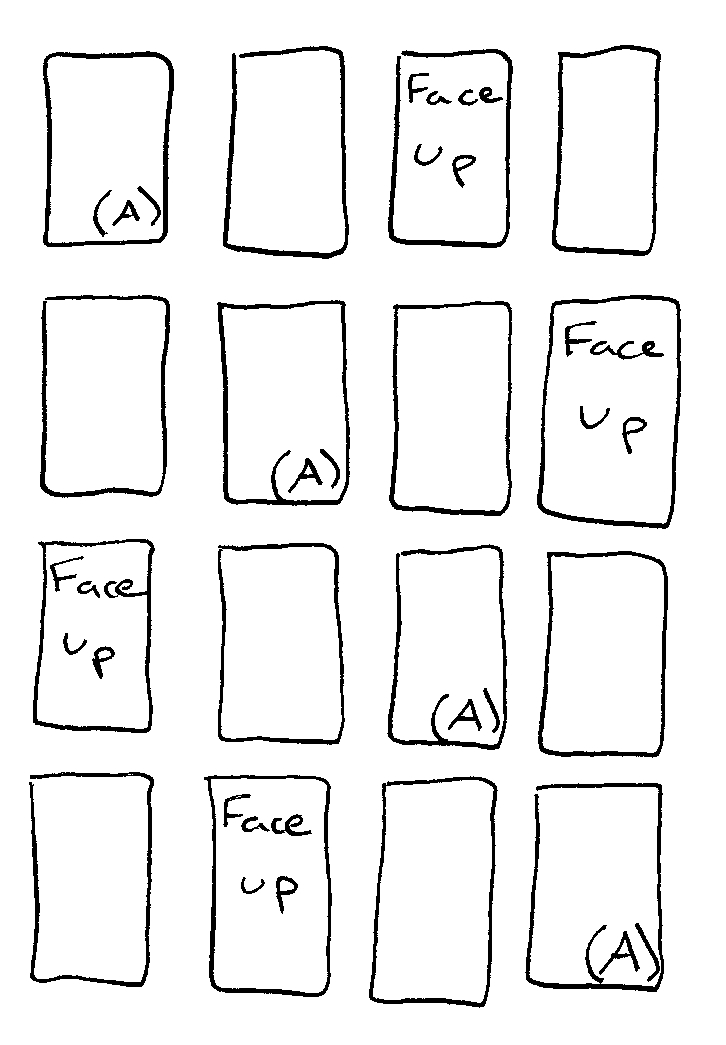
1. Set the deck—from the top down, it should read 2, 3, 4, 5, 6, 7, 8, 9, A, A, A, A (the numbers in any suit and all four aces).
2. Shuffle, being sure not to affect the top 12 cards (yes, this is a cheap trick).
3. Ask an audience member to pick and state a number between 10 and 20 (not 20!).
4. Taking one at a time from the top of the deck, count that many cards into a face-down pile on the table.
5. Ask your dupe to add the two digits of his/her number and state the sum.
The metric system rocks, right? And that's because it's an organic system of measure, derived directly from the circumference of the earth, right? And hasn't been subject to any malingering, gerrymandering, finagling or other debased punking by dirty human hands, right? Um, not exactly.
There are many mediums in which evil spirits may reside (most notably dwellings, persons and computers), each requiring its own specific rite of exorcism. The steps enumerated below deal specifically with human exorcism, or ridding the body of an undesired spirit/demon possession, in the Roman Catholic tradition.
Note: before performing an exorcism, evaluate the subject’s potential for violence (with the strength and malignity of the possession in mind), and restrain accordingly, usually with ropes, straps or duct tape.
Note II: The following ritual may or may not work with computers, depending on operating system and waterproofing. Still, it may be worth a try.
1. Priest is dressed in cassock, surplice and purple stole.