Track your comments!
[x]


When you register, comments on your articles and replies to your comments appear here. Register Now!

Sign in to your account
[x]

Not a Scientific Blogging member yet?

Register Now for a Free Scientificblogging.com Account

  • Customize your profile with pictures, banner, a blogroll and more.
  • Leave comments on articles, add other members to your friend lists, chat with people on the site.
  • Write blog posts that can be seen by hundreds of thousands of readers.

It's free and it only takes a minute!

Already a Scientific Blogging member?

Sign In Now

's Recommended Blogs
[x]
Blogs Instructions
's Recommended Books
[x]
Half Asleep in Frog Pajamas
by Tom Robbins
1
Books Instructions
's Affiliates and Organizations
[x]
hasn't added any organizations or groups yet.
1
Badges Instructions
Add Gerhard Adam to your friends
[x]
User picture for
Add
Cancel
Fake Banner
Search This Blog
About Gerhard

Gerhard Adam

...

View Gerhard's Profile
By Gerhard Adam | November 19th 2009 06:01 PM | 3 comments | Print | E-mail | Track Comments
The question was just raised in a previous blog entry about what a research scientist could learn from philosophy.  Perhaps this article, "Mad Science? Growing Meat Without Animals" can provide some insight.

Particularly telling was this quote:
"In principle, we could harvest the meat progenitor cells from fresh human cadavers and grow meat from them," Post said. "Once taken out of its disease and animalistic, cannibalistic context — you are not killing fellow citizens for it, they are already dead — there is no reason why not."

Still, Post suggests that marketing could overcome such hurdles.


By Gerhard Adam | November 15th 2009 05:42 PM | 3 comments | Print | E-mail | Track Comments
A story in the local newspaper related how a pit bull was turned into the animal shelter after having been found abandoned in a ditch with all of its teeth filed down to the exposed roots, emaciated by starvation (weighing less than 40 pounds), and having just given birth to 9 puppies that morning.  The mother also had a few pressure sores from where bones rubbed against skin.  All the puppies still had the umbilical cords attached and were wet.

This level of human cruelty and stupidity is beyond understanding and one wonders what could be done to bring such behaviors under control.


By Gerhard Adam | November 15th 2009 03:42 PM | 1 comment | Print | E-mail | Track Comments
A recent article, "Cloned Cows: Less In, More Out" raised the question of food safety, since its sale was approved by the FDA last year.

However, my concerns are much more fundamental.  The article indicates that cloning is beneficial so "that we get more beef for our buck".  Suggesting that there is an economic incentive to ensure that we produce beef more efficiently.  However, I'm not clear how this would be achieved since the costs that go into the cows would be offset by the other expenses produced such as patent rights (U.S. Patent 6590139).


By Gerhard Adam | November 13th 2009 04:37 PM | 1 comment | Print | E-mail | Track Comments
There was an interesting article "'Significant Amount' of Water Found on Moon" which was also followed by "Water on Moon Propaganda".

While the former is interesting, the latter is quite entertaining.  I tried to see if it was related to the phases of the moon (it wasn't).  I thought perhaps it could be linked to Friday the 13th (it couldn't).

This left only one thing.  Smaller brains.


By Gerhard Adam | November 13th 2009 01:20 PM | Print | E-mail | Track Comments
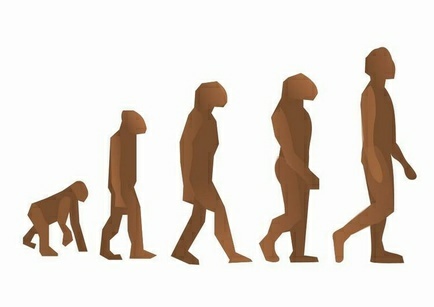
An article entitled "Humans Still Evolving as Our Brains Shrink" was simply too good to pass up.  At first I looked for a correlation with news reporting (thinking about a station named after the genera Vulpes).

Of course, one of the comments referred to a movie called "Idiocracy" which may well turn out to be prophetic. 

Kurt Vonnegut's "Galapagos" also comes to mind.  In any case, I suspect this is an unexpected turn in natural selection that we can all have some fun with.

By Gerhard Adam | November 13th 2009 12:58 PM | Print | E-mail | Track Comments
One of the key points that perpetually surfaces in the Intelligent Design debate is comparing animate with inanimate objects and attempting to draw comparisons or conclusions1.  This becomes more pronounced when we begin to consider the role of less tangible elements, like intelligence, and begin considering how such a thing would manifest in a machine.  In effect, it's the problem of determining what life is and how does it differ from everything else.

Often we look at complex machinery and associate meanings or parallels to biological systems, however this is an incorrect perspective.  No matter how sophisticated the machine is, it is invariably only a tool and as such needs to be examined from that viewpoint.


By Gerhard Adam | November 13th 2009 12:50 PM | Print | E-mail | Track Comments
Biology consists of much detailed information regarding genetics, molecular biology, biochemistry, and a variety of other components.  This has provided a great deal of insight into how life functions, evolves, and reproduces.  However, there are other realms of biology that attempt to find order where perhaps none exists.  In discussions of topics like "selfish genes", or "kin selection", or Hamilton's rule, we are getting into areas where causation is being sought where none may specifically exist or at least, not of a general type.


By Gerhard Adam | November 10th 2009 08:19 PM | 25 comments | Print | E-mail | Track Comments
There have been many discussions relating to transhumanism and augmenting intelligence as well as just intelligence itself.  However, at the heart of many of these discussions the subject of Artificial Intalligence (AI) emerges.  This raises the question of whether AI is possible and what it actually means.

There is no question that machines can be built to perform many intelligent-like acts and simulate human intelligence, but I would argue that there is a fundamental difference that isn't often mentioned.


By Gerhard Adam | November 5th 2009 12:27 PM | Print | E-mail | Track Comments
I recently read, in one of the posts, the following statement.

"Evolution is not fair, economics is not fair."

http://www.scientificblogging.com/news_articles/chemical_engineer_solves_capitalism_problem


I'm sure we've all heard the platitude that "life is not fair", which set me to thinking about what these statements even mean.


By Gerhard Adam | October 31st 2009 05:03 PM | 3 comments | Print | E-mail | Track Comments
In this article I am going to suggest that this arbitrary separation is meaningless.  Much like physics had to come to terms with wave-particle duality, biology must consider the same perspective where the answer depends very much on the question and how it is asked.