




While this would be great by itself (in a geeky kind of way), what makes it truly spectacular is the fact that Bentham actually created an algorithm to define exactly how much pleasure and pain an action would cause. (His application of algebra to life decisions is echoed by at least one complete whack-job modern author…)
To determine an individual’s pleasure or pain from an action, Bentham suggested weighing Intensity (pleasure’s strength), Duration (how long pleasure would last), Certainty (the probability action will result in pleasure), Propinquity (how soon the pleasure might occur), Fecundity (the chance the pleasure would result in further actions), and Purity (the probability these further actions would be pleasures and not pains). He also added Extent, taking into account the effects of said decision on other people.
We can only guess at the specific algebra Bentham used to compare these variables and he left no note of how to quantify, for example, intensity of pleasure, but in Bentham’s day he envisioned his hedonistic calculus used for many decisions, including calculating jail sentences: given a certain crime, Bentham thought it possible to determine the punishment that would outweigh the crime’s pleasure and thus prevent future crimes.
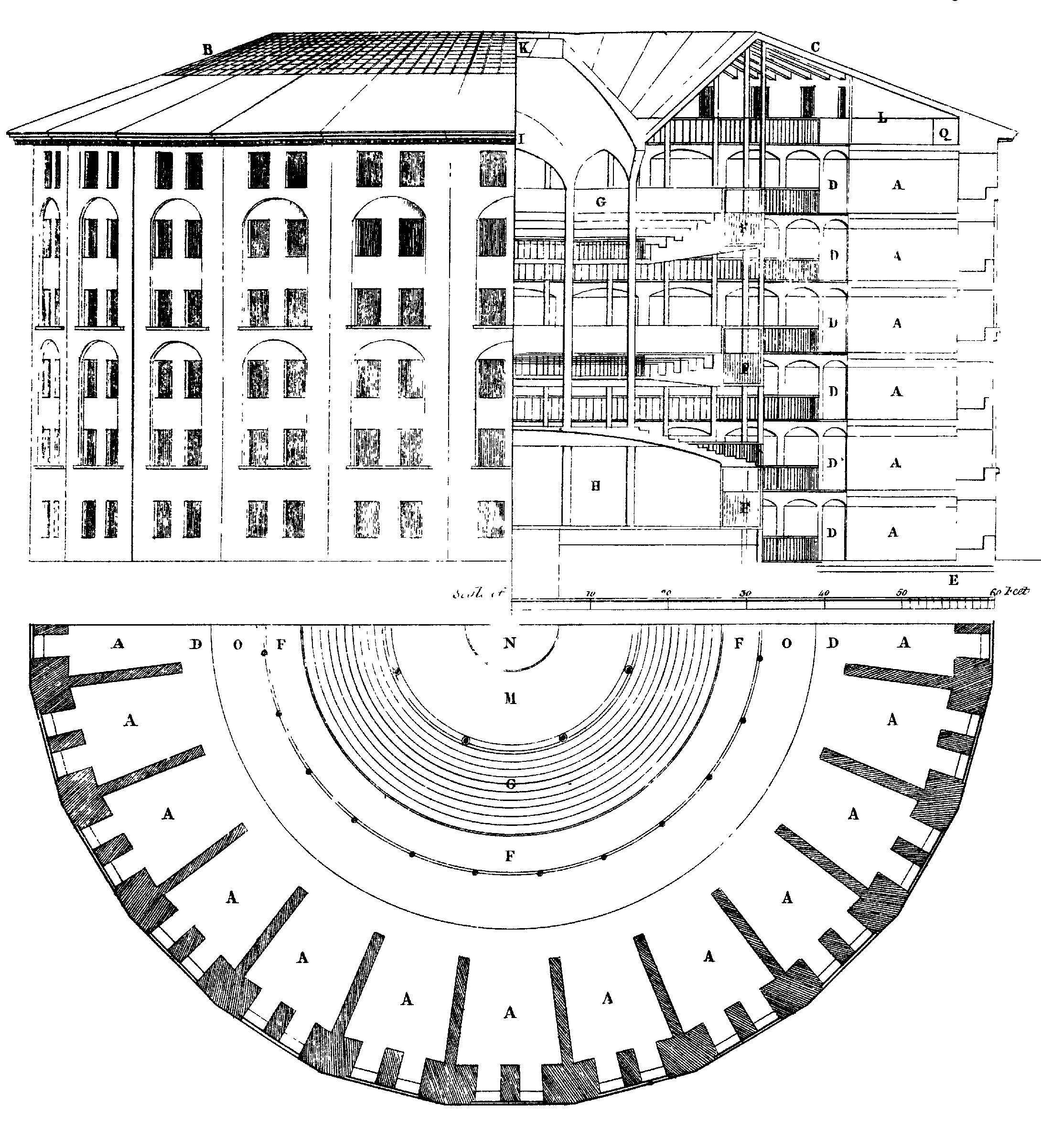
Interestingly, Bentham's thinking about prisons didn't stop at sentencing length. He also designed the prison known as the Panopticon, in which prisoners in open cells at all times feel as if they are being watched by guards in a central tower. To Bentham, the Panopticon allowed guards to gain "power of mind" over the prisoners. Here's his design:
Join me every Monday morning for more grandtastic goodies from The Geeks' Guide to World Domination. Or if you like your geekery delivered fresh, consider subscribing to my rss feed or joining my Facebook Fan Page.



Comments