hit tracker
Physical Sciences Earth Sciences Biology Front Page Medicine Neurosciences Culture

User login

Columnists

Banner

Fish Feet

I was supposed to go see James Watson talk today ...

Science & Society

...and quite frankly I am pretty pissed off that his lectures have been cancelled. James Watson, Nobel Prize winner and cofounder of the structure of DNA told the Times of London that "there is no firm reason to anticipate that the intellectual capacities of peoples geographically separated in their evolution should prove to have evolved identically." So guess what? Most venues hosting Watson have decided to cancel his forthcoming public engagement talks.

Unfortunately such comments have often been made by Watson and while I don’t agree with him, I certainly defend his freedom of expression. I also don’t think he has a special ‘responsibility’ being a Nobel Prize scientists to censor himself. It is unfortunate that a man with so much knowledge and experience is drawing such conclusions but sweeping his remarks under the rug doesn’t help people. The organizers of events across the country are sticking their heads in the sand. By canceling these talks and making the decision that we shouldn’t be subject to his perspectives, they have denied us the opportunity to see a great scientist and to question him on his views.

Twins: Identical, Mirror Images, Fraternal and Chimeras

Microbiology

Cloning is not a human invention; nature has been creating clones for millions of years, among all organisms including humans. Nature’s clones, identical twins, are born in approximately 1 / 1000 births. Identical twins come in two varieties: identical and mirror images. Both share 100% of their DNA and but in mirror image twins, small differences are ‘reflected’. Examples include skin variations such moles, dental patterns, hairlines and handedness.

The development of a truly identical twins versus mirror image twins comes down to timing. A single sperm will fertilize a single egg and begins development by splitting into more cells. If this group of cells, now called blastocyst splits into two separate parts in the first 9-12 days, identical twins will be born. But if the split occurs after that, they will be mirror-images of each other.

Fraternal twins are an entirely different matter. Fraternal twins are no more identical than any other sibling pair and are the result of two separate sperm fertilizing two separate eggs. This is can occur naturally, the result of the mother releasing more than one egg at ovulation. It may also be the result of medical intervention as many women take fertility drugs to improve their chances of conception. There is also a hereditary link as the incidence of fraternal twins do occur more often within a family.

Why Does My Baby Have A Tail?

Evolution

As I’m having a baby my mind has recently been turned to thoughts of the very weird and wonderful world of developmental biology. As a new parent tracks the progress of their child, you can’t help wonder about some of the really bizarre stages it goes through.

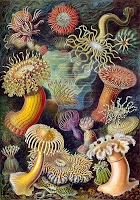
Some of the odd developments (gill slits and tails as examples) can be explained by the research of a 19/20th century German researcher, Ernst Haeckel. This eminent man was more than a scientist, he was a physician, philosopher, artist and teacher. Haeckel’s contribution to biology was immense, in addition to naming and identifying thousands of new species, he contributed many large-scale concepts to the fields of ecology and biology. His most controversial theory is often referred to as Recapitulation Theory.

Arrogant scientists battle to represent all of humanity

Paleontology

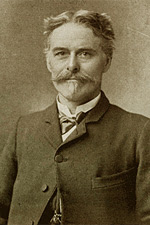
American paleontologist Edward Drinker Cope, died on 12 Apr 1897. Cope is best remembered for his rivalry with O.C. Marsh, often referred to as the Great Bone Wars. These two antagonists shared a lot in common: a fierce sense of competition, unbounded arrogance and a deep driving force that led them to unbelievable lengths to outdo each other. Cope led many great expeditions into the American West and was prolific in the naming of dinosaur species. Cope was also an ichthyologist, an evolutionist, and a founder of the Neo-Lamarckian school of thought.

But enough of the boring stuff, here's a story that really reveals the character of good old EDC:

The Myth of the Endangered White Tiger

Ecology & Zoology

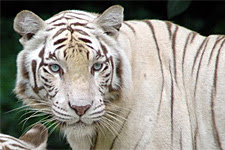
White tiger In response to inquiries after a previous blog entry, Macrocosmos and Microcosmos, this article discusses white tiger breeding and their conservational value.

First a quick history: white tigers are very rarely found in the wild. In about 100 years only 12 wild white tigers have been seen in India but they have long been a source of myth. They instill a sense of beauty and awe but folklore calls them an omen of death so while they are idolized by some, they are savagely hunted by others. This was the fate of one tiger, named Mohan, who was captured as a cub in 1951 by a Maharajah and his hunting party. Mohan was caged and was destined to father a significant portion of the world’s captive white tiger population.

Since the dramatic characteristics of white tigers are the result of a rare and recessive gene, all white tigers in zoos now are the descendents of Mohan or a other captive orange tigers whose recessive genes showed up through breeding programs. White tigers now represent a grossly disproportionate part of the captive tiger population compared to the natural world. The natural rarity of these animals and pressure from zoos and collectors to produce more white tigers means that current captive breeding pools go back to only a few closely interbred individuals.

Rare Grizzly - Polar Bear Hybrid Hunted

Ecology & Zoology

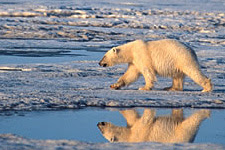
A recent issue of Nature celebrated Linnaeus’ 300th birthday with a series of editorials, essays and features on the continuing work of taxonomists. One of the more provocative articles discusses the definition of species, including the status of the beloved polar bear, Ursus maritimus.

Fossil tracks suggest dinosaurs could swim

Evolution

Ancient footprints have provided compelling evidence that some dinosaurs were able to swim. The 15m (50ft) trackway was discovered in the Cameros Basin in Spain, which, 125 million years ago, in the Early Cretaceous was a vast lake.

The unusual-shaped prints suggest the animal clawed at sediment on the lake bottom as it swam in about 3m (10ft) of water. Though it has been suggested that large sauropods occasionally waded through shallow waters, it is thought that these tracks were left by a large, bipedal, carnivorous dinosaur that was not wading, but rather was using the water to support its body.

Dr Loic Costeur, a palaeontologist at the University of Nantes, France, says "The Cameros Basin has thousands of walking footprints from diverse dinosaur fauna, but when we saw these it was obvious straightaway that this was a swimming dinosaur."

The underwater trackway is well-preserved in sandstone and is made up of 12 consecutive prints each consisting of two to three scratch marks. Ripple marks around the track suggest the dinosaur was swimming against a current, attempting to keep a straight path. Dr Costeur also stated that "The dinosaur swam with alternating movements of the two hind limbs: a pelvic paddle swimming motion."

Creation Museum reveals Adam's sordid past

Evolution

I took a long weekend so I guess this story is a few days old but I had to relay it because it is so funny! Thanks to Hank Campbell who organizes Scientific Blogging for sending it along.

The Creation Museum of Petersburg, Kansas has been wrought with criticism since before it even opened, but most recently, they have been embroiled in a ‘moral scandal’ by an employee hired to tell the story of the fall of man.

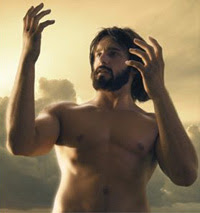
A variety of actors were hired to play out scenes from the bible and the man chosen to play God’s golden boy, Adam, has now been revealed to have a ‘sordid’ history. Eric Linden, owns a website called Bedroom Acrobat, on which he is (allegedly -I cannot say this myself as the site has apparently crashed due to traffic overload) pictured. Linden, a graphic designer, model and actor purchased the domain name for this site which mostly sells clothing.

Museum administrators were swift in removing the 40-second video in which he appeared from the display. “We are currently investigating the veracity of these serious claims of his participation in projects that don’t align with the biblical standards and moral code upon which the ministry was founded,” Answers for Genesis spokesman Mark Looy said in an electronic statement.


News From Around The World Today

Science & Society

Too many weird stories to blog about today so here are some links:

Poland inquiry to probe 'gay' teletubbies

Snake explodes after swallowing alligator

Ecology & Zoology

Thanks to Janine for pointing out this story of a python which burst open after gobbling up a Florida gator. The strange scene was found by park rangers in the Everglades National Park. The Burmese python is likely an escaped pet or perhaps a descendant of one. In recent years many guilt-ridden owners release their exotic pets into the hot and wet swampy environment because they are no longer able to take care of them and do not want them put down.

Australian couple find floating gold

Ecology & Zoology

Continuing on the whale theme today, an Australian couple has had an extraordinary windfall: walking along a remote beach they found 32-pounds of sperm whale puke, for which the proper scientific word is ambergris. At first this may seem like a disgusting curiosity worth no more than a moment of notice for its scientific value, but in fact the monetary value of the discovery is estimated to be over $1 million USD!

Ambergris, often referred to as ‘floating gold’ is prized by perfume makers and sold for up to $90 USD/gram (gold is worth about $25 USD/gram). But trading ambergris is controversial and technically illegal. CITES (Convention on International Trade in Endangered Species) forbids trade of certain animals’ products for commercial purposes. However, it has difficulty committing to a ban on waste products by animals. Ambergris is formed when gastrointestinal materials harden around indigestible squid beaks that a sperm whale swallowed. When the mass gets large, the whale coughs it up (not unlike cats’ hairballs:)

It is not clear what will happen to the find. Though it is illegal to trade, precedent has thus far allowed its exchange.

Scientists Complete 'Book of Life' from Aardvarks to Zorillas

Ecology & Zoology

The Encyclopedia of Life project will detail 1.8 million known plant and animal species in the format of an online archive. Each species will have its own page with descriptions, photographs, videos, and maps, compiled by experts.

Sneezing in the Sun

Genetics

After eight years and I am still learning new things my husband: we were walking down the street yesterday when the clouds parted, revealing a bright sun and he consequently sneezed! Now I realize that this phenomenon affects a significant number of other people I know. So in case you were ever wondering why looking at the sun on a bright day makes you sneeze here is the answer:


When a nerve cell is stimulated it passes on a chemical / electrical message to the next nerve cell in the chain. However, if it is a very strong message, this might also leak out and stimulate nearby nerve cells. So, when you look at the sun on a bright light, your eyes (and their nerves) suddenly have a lot of very strong information to pass to the brain. In addition to passing on their message, they also 'leak' a bit. Part of the path for the optic nerves (from your eyes) happens to be close to your sneeze reflex and so it can be triggered by accident.
-This text was originally contributed by David Hone on Ask a Biologist

Anecdotal evidence also seems to indicate that this unusual reflex has a genetic link, so may be common among members of the same family. This is confirmed by R. Eccles of the Common Cold and Nasal Research Group who says that this phenomenon (which he terms the ‘photic sneeze’) affects between 18-35% of the population. And that the photic sneeze is a well known hazard to fighter pilots when they turn towards the sun or are exposed to flares from anti-aircraft fire.

Monkeys in your pants and other hilarious antics of wildlife smugglers

Ecology & Zoology

Some criminals get caught in the act of smuggling strange cargo and are not always very clever about heir tactics. In the United States, wildlife smuggling is the nation’s second-largest black market, (behind narcotics), worth $9 billion a year.

Memed again: Blogs that make me think...

Humor

Memed again! Here are some great blogs that make me think 'outside of my box'. Pass on the meme...

Secret Sex Lives of Animals
A weekly column on the bizarre, wonderful, colourful and sometimes shocking world of animal mating habits.

The Domestic Minx
A deliciously dysfunctional diary about domestic living.

The Dragon's Tales
A great mix of science and current events from all over the globe.

Prehistoric Barbie

Evolution

A letter, supposedly sent to the Smithsonian Institute. Hilarious!

Paleoanthropology Division
Smithsonian Institute
207 Pennsylvania Avenue
Washington, DC 20078

Dear Sir:

T. rex ate coconuts

Evolution


A new museum in Petersburg, Kentucky greets visitors with a 20ft tall tumbling waterfall and at its base, mannequins of frolicking children play amongst dinosaurs. The Creation Museum, which cost $25 million to build, is home to many unusual sites: a diorama of ancient people overshadowed by a towering T. rex, Adam and Eve swimming in a river with giant reptiles, and even a scale model of Noah's Ark.

It seems Noah solved the problem of fitting dinosaurs into his vessel by only taking baby dinosaurs. Indeed, the ark has a detailed display of many animals happily boarding the boat: dinosaurs cavort with giraffes, penguins, hippos, and bears.

Museum guides tell visitors that before Adam and Eve were expelled from paradise all of the dinosaurs were peaceful plant-eaters.

In Genesis 1:30 God gives ‘green herb’ to every creature to eat and so there were no predators. When a curious museum visitor asks, why exactly T. rex had six-inch long serrated teeth, the guides go on to explain that T. rex used his big teeth to open coconuts. Apparently it was only after Adam and Eve sinned and were cast out of paradise that the dinosaurs started to eat flesh.

My opinion: I think the people who built this museum are smoking a bit too much ‘green herb’.

Antarctic Amphibian: a fossil from 245 million year in the past

Physical Sciences

The beautiful thing about the Antarctic is that it is one of Earth’s last unexplored frontiers. New information about climate, geology, and paleontology is discovered regularly and today, the Journal of Vertebrate Paleontology announced the discovery of a fossilised amphibian which lived more than 245 million years ago in the Triassic of Antarctica. Its presence suggests that the climate at the time was mild enough to allow cold-blooded creatures to live near Pangea’s southern margin, at least seasonally.

Bears Hunt Belugas

Evolution

Polar bears live a feast and famine lifestyle. They are large animals (an adult males weighs 300-600kg) that live in the freezing tundra so they have huge metabolic needs. They normally prey on ringed seals but will eat almost anything they can catch, including walruses, birds, eggs and occasionally they supplement their diet with a big, juicy, beluga whale!

Beluga whales are distinctive for their pale skin and large melon shaped head. These animals can grow up to 5m (16ft) in length and live in large pods, mainly in the Arctic and Canadian Subarctic. Belugas live close to coastlines and in winter they occasionally become trapped in savsatts, small openings in ice packs. Belugas can find themselves the victims of shrinking savsatts, which they use to breath. Each animal will take a turn coming up for air and in the worst of winter, their movement is all that keeps the savsatt open.

A prehistoric tale of an Italian whale

Evolution
Fossils turn up in the most unusual places. Simone Casati, an amateur paleontologist, was exploring the famed vineyards of Italian winemaker, Castello Banfi, when he came across a small piece of bone poking out of the soil. He started digging and realized that he had unearthed more then he had e anticipated: a 10m (33ft) long skeleton of an ancient whale.

The rich soil of the vineyards was laid down five millions years ago in the Pliocene, a time when Tuscany was covered by a warm, shallow sea rich in fauna.

The skeleton, which resembles a modern rorqual whale, is almost complete and well preserved. It belongs to the group of large baleen whales that includes the blue, humpback, and fin whales.

The excavation team, led by palaeontologist Menotti Mazzini of the University of Florence, are working on a month long excavation, after which the skeleton will be removed to be cleaned and restored. The winery has requested permission from Italy's Department of Cultural Heritage to host the fossil and display it to the public in Banfi's museum.

Cristina, M. March 23, 2007. Ancient Whale Fossil Uncovered in Tuscan Vineyard. National Geographic News.

Syndicate content

Category Feeds

Countdown To V2

0 days, 6 hours and a few minutes.

Books By Writers Here

Internships

We do offer unpaid internships in programming and science journalism to college students or recent graduates seeking to build up their portfolios.

Development interns will need to be proficient in PHP and CSS and provide samples of work done in a multi-user environment platform and sign a non-disclosure agreement.

Science journalists will need to provide samples from a university newspaper or professional publication and list which semester they want to work.

Please use the contact info available in the footer of the page.