
hit tracker
  • Physical Sciences
  • Culture
  • Earth Sciences
  • Biology
  • Home Page
  • Medicine
  • Neurosciences

Comment Tracker

User login

Columnists

Banner

What The Platypus Genome Is and Isn't

User picture for adaptivecomplexity

About Michael White

Welcome to Adaptive Complexity, where I write about genomics, systems biology, evolution, and the connection between science and literature, government, and society.

I'm a biochemist and a postdoctoral fellow in the Department of Genetics and the Center for Genome Sciences at the Washington University School of Medicine. In the lab I use the tools of yeast genetics, genomics, and biochemistry to study gene regulation during the cell division cycle.

Subscribe to this column:
Adaptive Complexity

Genetics

I haven't contributed a single thing to the platypus genome project, but since my desk sits one floor above where people and robots broke the platypus DNA into chunks, cloned those chunks into bacteria, sequenced the pieces of DNA, and used massive amounts of computing power to assemble the stretches of sequence into a complete genomic whole, I'm going to consider myself somewhat of an authority on the subject and tell you what's wrong with other people's ideas about the platypus.

The genome sequence of the platypus was published Thursday in Nature, and from the press headlines, you could be excused for thinking that genomics has in fact confirmed that the platypus is a freak of nature: part bird, part reptile, and part mammal. The animal certainly looks like it - the platypus has the webbed feet and bill of a duck, and venomous spines and rubbery eggs that remind us of reptiles, but it has fur and feeds its young with milk, so it must be a mammal. The confusing press headlines might even lead you to believe that we sequenced the platypus genome just to figure out what this thing is, when the truth is, as we'll see below, that the genome sequence has essentially confirmed what evolutionary biologists have already deduced about the position of the platypus on the tree of life.

Is the platypus part bird, part reptile part mammal, an amalgam of very different groups of animals? Is it a primitive mammal that resembles the early ancestors of all mammals? Can we figure out just what this creature is by gazing at its genome?
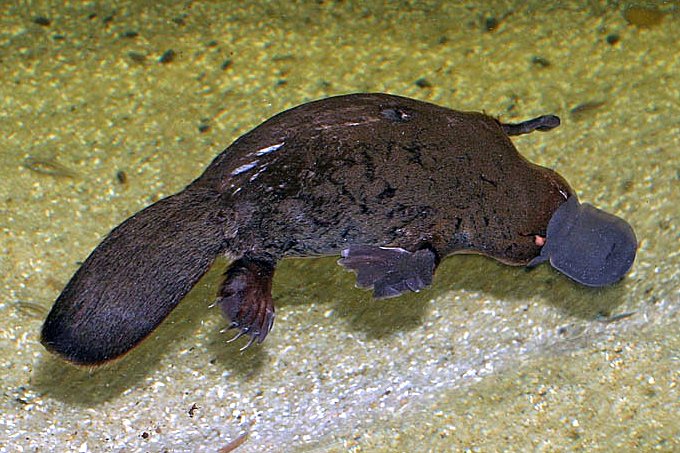

Photo Credit: Stefan Kraft, courtesy of the Wikipedia Commons

The Platypus is a Genuine Mammal, not an Amalgam

The platypus Ornithorhynchus anatinus is part of a group of mammals known as Monotremes, who last shared a common ancestor with us between 160 and 200 million years ago. At that point, one mammalian line split off to give rise to today's monotremes, while another eventually led to the marsupial and placental mammals. What this means, of course, is that the platypus is as distant from that ancient ancestor as we are - humans, kangaroos, and platypuses are all modern mammals.

However some traits of the platypus can be considered primitive, if you take primitive to mean 'resembles the ancestral form' (instead of the more colloquial meaning 'less advanced'). The most obvious example is that the platypus lays eggs, something which ancient mammals also did, but which most modern mammals no longer do. Egg-laying is an ancestral trait that has persisted in this particular evolutionary line, a trait which the platypus inherited from the egg-laying, reptile-like ancestors of all mammals - in that sense, it's primitive.

Other features of the platypus aren't primitive, and have absolutely nothing to do with the fact that all mammals shared a common ancestor with today's birds and reptiles. The venomous spines possessed by the male platypus are not there because of some reptile ancestor that had venomous spines; early mammals probably had no venom, and evolutionary biologists have long insisted that this interesting platypus feature is likely an independent evolutionary invention. Venomous spurs are no more reptilian than the human lack of fur: we don't have fur, and our reptile ancestors didn't have fur, but our bare skin is not a trait inherited from fur-less reptile-like ancestors, it's a trait we lost recently in our evolutionary history.

The same is true of the 'duck bill', which has nothing at all to do with any ancestors the platypus (and all mammals) share with birds: it's a separate invention, a highly developed electrical sensor that the platypus uses to search for food, much like the bill of a paddlefish (which is also an independent invention). Despite the bill and the webbed feet, the platypus is not "part bird" (as USA Today proclaimed), and its flat tail does not make it part beaver either (beavers are placental mammals, more closely related to us than to a platypus).

The platypus is not part anything: it's 100% mammal, with some primitive traits of ancient mammals, like egg laying, and a few newly invented traits like the bill, the webbed feet, and the venomous spines.

The big story hidden in the platypus genome is that evolutionary biologists were right about what the platypus is: by looking at its genome, we can see which platypus traits are ancestral, and which are new inventions (derived is the proper term), only now in much more detail because we can see how the genes involved changed.

Gazing Into The Platypus Genome

So what can we learn about this critter by gazing at its genome? By making the right comparisons, we can figure out which genes were in the shared ancestors of birds, reptiles, and mammals, but which have been lost in the line leading to marsupial and placental mammals. Below you can see the evolutionary relationships between major groups of mammals, as well as birds and reptiles. For each of these major branches, except reptiles, we have at least one good genome sequence, which I've indicated in the figure. (The Anole lizard genome sequence is in progress, so right now we have to make many of the key evolutionary comparisons with the chicken genome.)
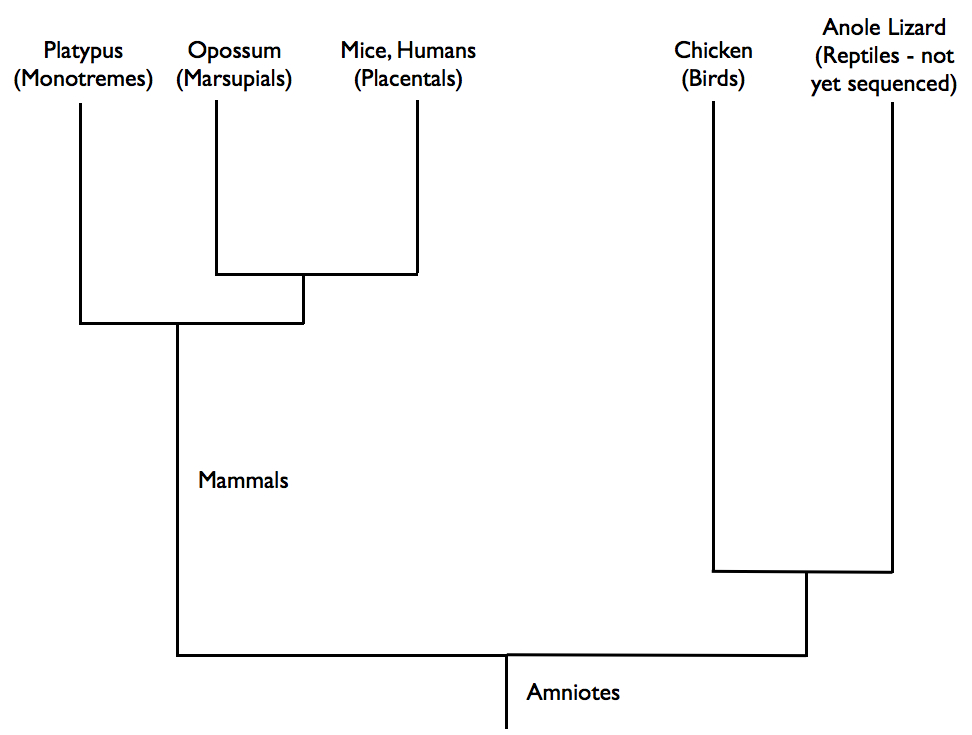
The comparison works like this: If a particular gene is present in the platypus and the chicken genomes, but not in other mammal groups, then we conclude that this gene was present in the shared ancestor of all these groups, but was at some point lost in the line leading to marsupial or placental mammals. Or, if a gene is present in the platypus, but not in other mammals or birds, then we conclude that this particular gene was not present in that shared ancestor of all these groups; it was newly derived at some point in the evolutionary line leading to monotremes. Of course, there is an alternate explanation: that same gene could have been present in the last common ancestor, but lost in birds, marsupials, and placental mammals, which is less likely but still possible. You get the picture - with the right set of genomes in hand, one can make all sorts of comparisons like this. (And, just to clarify, when I say gene here, I also mean variants of a gene, or any other genetic feature we can look at in the genome.)

By doing this, we can find genes for ancestral mammalian traits that are preserved in the platypus, but which have been lost in marsupials and placental mammals. Genes contributing to egg-laying are the obvious candidates, and in the platypus genome we find several genes involved in egg development that have previously only been found in fish, birds, and reptiles. What this means is that these particular genes, present in the early ancestors of all mammals, were lost in marsupials and placentals, but preserved in the monotreme line. Before the genome sequence came out, the story evolutionary biologists would tell you was this: egg-laying is a trait that's been preserved in monotremes in an unbroken line from early egg-laying ancestors, while the rest of the mammals lost that egg-laying ability. And now the genome sequence bears this story out.

We can find another example of an ancestral trait in the platypus genome: the sex chromosomes. While humans have one X chromosome (although you may have two non-identical copies of this particular X chromosome), the platypus has 5 - that's right, 5 X chromosomes. These X chromosomes look nothing like the human one; instead, they resemble the sex chromosomes of birds (and probably some reptiles, but we have less sequence data for reptiles). Again, this is probably another example of the ancestral state being largely preserved in the platypus. The last common ancestor of birds, reptiles, and mammals probably had a similar sex chromosome setup, but in the evolutionary line leading to marsupial and placental mammals, that setup has changed significantly.

The Independent Invention of Venom

What about venom? Few other mammals have venom, and the most plausible evolutionary scenario is that early mammals did not have venom - it arose independently in the platypus, and not by inheritance from a venomous reptile ancestor. Again, what we find in the genome supports this scenario: the platypus does not have the exact same venom genes found in reptiles, meaning that the platypus did not inherit its venom-producing ability from an ancient venomous ancestor. Platypus venom is a great example of what biologists call convergent evolution, the independent evolutionary invention of similar traits in different groups of animals.

The platypus genome confirms this independent invention story, but with a very fascinating twist: there is a set of non-venom genes which have been recruited at least twice in evolutionary history to make venom genes: at least once in reptiles, such as poisonous snakes, and once in the platypus.

To understand what's going on here, you need to know what venom is made of. Venom is largely a mixture of various proteins that do nasty things to the prey or competitors of venomous creatures. The genes coding for these venom proteins are very similar to, and actually derived from hormone gene families, such as one family called 'beta-defensin'. We have beta-defensin genes, which make up part of our immune system. Reptiles and the platypus also have these genes. In venomous reptiles, some of the beta-defensin genes have been modified to make venom. What the platypus genome shows is that at some point in the non-venomous evolutionary history of the platypus, beta-defensin genes were again recruited to make venom, just as they were in reptiles, but in a completely independent event.

In other words, platypus venom is not primitive; it's not a reptilian trait that the platypus inherited from the last common ancestor shared by mammals and reptiles. Contrary to what you may have read in the press, venom genes are not signs of a link between the platypus and reptiles. Here is the evolutionary tree researchers produced from the sequences of beta-defensin genes (you can read Ryan Gregory's great primer on how to read these trees):
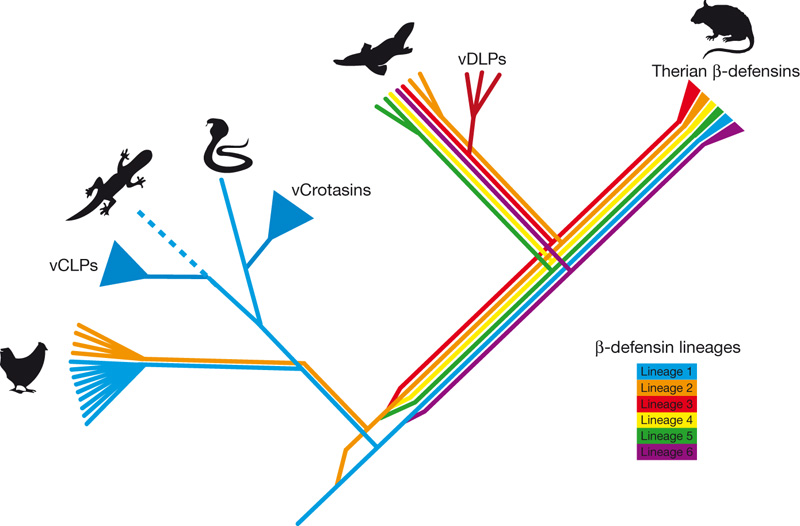
Figure 4, Nature 453:180, published under the Creative Commons License

This tree shows, based on the sequence data of the genes themselves, that the platypus beta-defensin genes descend from the ancestor of all mammals, and not from a venomous reptile.

So the genome sequence tells us what biologists have been saying all along: the platypus is not evolution's Frankenstein, not an amalgam of spare parts from different species. The platypus is a marvelous example of how evolution works, preserving useful traits through long stretches of evolutionary time, while also inventing new traits, sometimes over and over again from the same raw materials in very different lineages. That's as true of our history as it is of platypus history.

But is this why we sequenced the platypus genome, just to learn about its evolutionary story? I'm a big advocate of answering basic research questions like this, yet this is not the only valuable aspect of the platypus genome. One of the best ways to learn about the functions of the various parts of the human genome is through triangulation, by comparing our genome with other genomes that are spaced at various evolutionary distances from ours. One case that stands out right now is that of the immune system genes in the platypus, which promise to teach about the evolution of the immune system in mammals, which in turn can shed light on how our own immune system functions and goes awry.

The platypus may look odd, but its genome fits nicely into an already well-established evolutionary picture, and in spite of this mammal's strangeness, it has much to teach us about ourselves.

For more on platypus evolution, and the misleading language found in both the press and the scientific papers themselves, read Ryan Gregory's take.

SUPERB.

SUPERB.

Thanks. I had written this

Thanks. I had written this thing up, and then I saw your piece - which made me scan my draft to make sure I hadn't fallen into any of the mistakes you so deftly pointed out!

Mike

"The platypus is .. 100%

"The platypus is .. 100% mammal" - To say that the Platypus is part bird and part reptile is not entirely inaccurate as their Genome has just revealed. It is perhaps indeed a more accurate description than to assert that it is "100% mammal". "A draft sequence of the platypus genome reveals reptilian and mammalian elements and provides more evidence for its place in the ancestral line of animal evolution."
http://www.nature.com/news/2008/080507/full/453138a.html
The venom genes may have evolved independently but it shares other reptilian genes.
How do you define an animal to be "100% mammal"? and thus how precisely do you determine that it is "100% mammal", or indeed 100% anything when the genetic relationships are so clearly revealed?

The genetic relationships

The genetic relationships found in the genome show what evolutionary biologists have long established with other evidence: the platypus, and all other mammals, last shared a common ancestor with today's birds and reptiles about 300 million years ago. In other words, we are just as closely related to reptiles as the platypus is.

The reason a platypus has some 'reptilian features' like egg-laying is not because it is part reptile, or more closely related to reptiles than we are, it's because certain ancestral traits remained largely unchanged during its evolutionary history. Up until about 160 million years ago, all mammals were egg-laying, but our line lost that ability - along with some of the genes involved.

Unfortunately, much of the news coverage of this, including the nature news story, is confusing on the evolutionary biology.

Mike

You have said "all other

You have said "all other mammals, last shared a common ancestor with today's birds and reptiles about 300 million years ago. In other words, we are just as closely related to reptiles as the platypus is." That inference (In other words) is fallacious - apparently we shared a common ancestor with the platypus 166 million years ago, so they could be well over a 100 million years closer to reptiles than we are.

Rick Wilson, director of The Genome Center Washington University in St Louis had this to say "You see genes that look reptile-like, genes that look bird-like and genes that look mammal-like" and Jenny Graves, head of the Comparative Genomics Group, Australian National University said "The platypus is a very ancient offshoot of the mammal tree, so it was 166 million years ago that we last shared a common ancestor with platypuses, and that puts them somewhere between mammals and reptiles, because they still maintain quite a lot of reptilian characteristics that we’ve lost .. So we can use them to trace the changes that have occurred as we went from being a reptile, to having fur to making milk to having live-born young."

I think to deny that platypus's are far closer related to birds and reptiles than we are is misleading both from the genetic point of view and from its obvious characteristics like a beak, egg laying and webbed feet. Thus I stand by my contention that to say a platypus is part bird, part reptile, part mammal is a more accurate description of the reality than your statement that it is 100% mammal. - Richard

The lineage that includes

The lineage that includes modern platypus and the one that includes placental mammals converge at a point 166 million years (or thereabouts) ago, which means that from that point backward in time they are exactly equally related to any other lineage.

Think about it this way. The family line that led to you and the one that led to your first cousin converge at an ancestor (your grandparent), and then beyond that any relatedness you may have to other more distant relatives is equal because it is connected via the same line.

The quote you give is, at best, poorly worded and at worst demonstrates some common misconceptions about evolutionary relationships between modern taxa.

"..which means that from

"..which means that from that point backward in time they are exactly equally related to any other lineage."

I dont see how that follows. One lineage evolves and diverges greatly and another doesnt - thus the one that doesnt evolve as much is much closer genetically related to the ancestor than the one that does. This would be magnified over time.

This is borne out by the genetic study.

And the people who you have accused of choosing their words poorly and demonstrating common misconceptions about evolutionary relationships between modern taxa are no less than the Director of The Genome Center Washington University and the Head of the Comparative Genomics Group, Australian National University, both of whom were involved in the study.

What you are talking about

What you are talking about is amount of change over time, not relatedness.

The platypus, like all modern species, retains some ancestral characteristics and has some highly derived ones. Yes, the platypus lays eggs, which is primitive relative to other mammals. It also has venom and electroreception, which are derived relative to other mammals.

Here is how one can think of this:

Once two lineages have separated, each evolves new characters independently of the other and, with time, each will show a mixture of plesiomorphic [inherited largely unchanged from the ancestor] and apomorphic [newly evolved and thus not possessed by the ancestor] character states. Therefore, extant species in both lineages resemble, to varying degrees, their common ancestor. Consequently, whereas character states can be relatively ancestral (plesiomorphic) or derived (apomorphic), these concepts are nonsensical when applied to whole organisms. Crisp and Cook, Trends in Ecology and Evolution 20: 122-128)

Regardless of their role in sequencing the platypus, they may have minimal training in evolutionary biology.


If I understand the quote

If I understand the quote you have given from Crisp and Cook, they are saying that "character states" (a beak?, webbed feet? fur? etc) are "nonsensical" (pretty strong words) when applied to "whole organisms" (in this case a platypus). Quite a sweeping statement and I dont see how it derives from, what they have said previous to this.

However we are not talking about "character states", or physical characteristics (why cant evolutionary biologists use simple understandable English?), though some of them may indeed be due to the genes inherited from the ancestor. We are talking about genes, which very much determine and establish relatedness between species.

I wouldn't lightly belittle geneticists knowledge and contribution to evolutionary biology. Recently the evolutionary tree was shaken up due to the genetic study of the comb jelly fish. Eventually I think all taxa will have to be redefined on the basis of their genomic code.

We're not belittling

We're not belittling geneticists. I work in the same department and same Center as Rick Wilson - his office is just down the hall from my desk, and I have regular opportunities to hear him speak. He would tell you the same thing Ryan and I are telling you about relatedness and phylogenetic trees.

What he was trying to say in that quote is the same as the point I'm trying to make in this post - that there are some genes, such as certain genes involved in egg development, that have been retained both in the platypus and in birds, but which have been lost in other mammals; thus the platypus has retained some ancestral traits.

But overall, the established position of the platypus on the phylogenetic tree is supported by the genome sequence- the platypus genome paper has a figure with that same tree that is in my post above.

Mike

They are saying that the

They are saying that the notion of "primitive" applied to whole organisms does not make sense, but refers only to particular characters.

No one is belittling geneticists.

"The lineage of which humans

"The lineage of which humans are a part is a very ancient offshoot of our mammalian family tree, so it was 166 million years ago that we last shared a common ancestor with humans, and that puts them somewhere between mammals and reptiles, because they lack a lot of specialized characters that we have gained but the ancestral amniote also lacked; for instance, they have no electroreception, no bills, no webbed feet, and no venom. So we can use them to trace the changes that have occurred as we went from being a reptile, to having fur to making milk to having our specialized features."

- John Q. Platypus

The key is which characters are being analyzed, and whether evidence shows that platypus exhibit a less derived form of these than humans. It is not sufficient to argue that they are "early branching" and therefore ancestral in general. A branching event is a split which is followed by varying amounts of change in particular traits in the two lineages.

I am not sure about the

I am not sure about the quote from “John Q. Platypus”, possibly some private joke but very similar to the one from Jenny Graves. I feel a little outgunned here as I neither share the physical proximity to where some of the sequencing was done, nor indeed have any qualifications in biology or genomics whatsoever (I am an engineer – genetics is only a recent fascination). I do not have the good fortune of hearing Rick Wilson’s talks or sharing his thoughts, thus I can only go by my understanding of the situation, which is as follows:

The genome of the platypus has only just been sequenced – it's a book that we have only just opened and full story will take some time to unfold. From initial readings it is apparent that the genome shares features with mammals, birds and reptiles. It may thus provide many clues on the story of the genetic evolution from reptiles to us.

From the evolutionary tree that I saw on Natures page it appears much more closely related to reptiles and birds than we are. To say we are equally related to reptiles assumes that evolution follows equal rates at each divergence, which is not true. The evolutionary tree is not set in stone and is subject to constant refinement and change. The story of evolution is full of holes and gaps. The platypus genome, sharing as it does, genes in common with mammals birds and reptiles may go some way in filling in those gaps.

And with that I will bow out of this discussion – Sincerely - Richard

Don't feel like you have to

Don't feel like you have to bow out! The whole point of the comments is to have a chance to discuss these things - you're not intruding or crashing any private party.

Looking at phylogenetic trees can be confusing, which is why Ryan has written a series of articles about reading them (which he's linked to in the comments).

But here's another key thing to keep in mind about genome sequences: they never (as far as I know, without exception) provide any surprises about where on the evolutionary tree an entire organism belongs. That is because certain small regions of the genome (such as ribosomal genes) have previously been sequenced, usually years before, giving biologists a chance to look at all of the data - fossils, morphological features, and DNA sequence data - when figuring out where an organism belongs on these trees.

However, genome sequences do often tell us interesting things about individual genes - some of which (like platypus egg genes) may resemble the ancestral form, and others of which may be new. While some individual genes may have changed a lot, and others may have changed little in millions of years, the vast bulk of the genome, in any genome that has been sequenced, supports the phylogenetic trees that biologists publish.

"But here's another key

"But here's another key thing to keep in mind about genome sequences: they never (as far as I know, without exception) provide any surprises about where on the evolutionary tree an entire organism belongs."

I can think of two - The place in the evolutionary tree of Archaea (major major) indeed the acceptance of Archaea as a separate life form, and the comb jelly fish (major major again) - the jury might be out on this one but the Archaea didnt get its rightful place without a fight.

The subject is a bit complex

The subject is a bit complex and should probably be covered in a separate article, but the determination of relatedness based on genetic data is not about genetic similarity per se, but the fact that genetic insights reveal a probable branching order -- and hence phylogenetic relatedness. So yes, genomic data can be used in this way, but not as a bulk similarity comparison, rather as an indicator of who is descended from most recent common ancestors. After that, one looks at similarity as a function of degree of change since the split, but relatedness doesn't change. Put another way, branch order (relatedness) is the same, but one could have branch lengths (genetic distance, or degree of divergence) be unequal as an indication of rates of changes.

So here's where I think the

So here's where I think the issue lies...

It's misleading to say that the platypus has genes or features that are "bird-like" or "reptile-like," and that it has these genes because it is "part bird" or "part reptile." It's misleading because it suggests that the evolutionary path somehow went bird -> platypus -> other mammals; that these are "bird genes" that were developed first in birds and then passed on to the platypus when it evolved.

Let's give a random name to the 300-million-year-old ancestor of reptiles, birds, and mammals; the grandpasaurus, say. It's more accurate to say that reptiles, birds, and platypi all have several genes that are grandpasaurus-like, such as laying eggs. These genes are not proprietary to birds or reptiles, and having them does not make one related directly to birds or reptiles; only related directly to the grandpasaurus.

You do make a good point that evolution proceeds at different rates in different populations. Sharks and crocodiles are often cited as being evolutionary throwbacks because they haven't changed much over many millions of years, while other types of animals (like primates for instance) evolved at a much faster pace.

And while the platypus has evolved quite a bit since our last common ancestral split (gaining the electrolocating duck-bill, the venomous barbs, etc.), there are other features that we might consider primitive because they resemble features of the grandpasaurus that our branch of mammals moved away from, like the egg-laying.

However, in judging speed of evolution by gross phenotypic traits, like whether it lays an egg or whether it produces milk, is automatically assigning a value judgment to those adaptations we most readily recognize. There are likely to be very many grandpasaurus genes that we humans still have, but that the platypus ditched years ago. Those genes, however, don't necessarily make us "closer" to birds or reptiles than the platypus.

If we start assigning value judgments about "these adaptations are 'further away' from birds/reptiles; these other adaptations are 'closer to' birds/reptiles" then we're getting out of what can be accurately classified as scientific. The only metric we can use that is not introducing value judgments about the worth of various genes and the "closeness" between evolutionarily independent species is time. Specifically, how long ago was the latest common ancestor?

Phylogenetically, mammals and reptiles/birds are mutually 300 million years apart. Placental mammals and monotremes are mutually 160 million years apart. That means that all mammals are equally as "far away" from reptiles/birds; just as how humans, cats, and kangaroos are all equally as "far away" from platypi.

YES.

YES.

There are likely to be very

There are likely to be very many grandpasaurus genes that we humans still have, but that the platypus ditched years ago.

You're right, there are many gene likes that - I put some numbers in this comment.

Mike

From the evolutionary tree

From the evolutionary tree that I saw on Natures page it appears much more closely related to reptiles and birds than we are.

That is precisely why those trees are misleading!

I invite you to see my posts on the topic, in which I discuss this problem:

Platypus sex chromosomes and basal-equals-primitive

Bad quotes about evolution and genomics

Ok I read your page on Bad

Ok I read your page on Bad quotes about evolution and genomics, and understand what you are getting at with the story from Platypus’s side. Yes the Platypus is every bit as "modern" as we are - assuming modernity to mean total time of existence from the time of the common ancestor to now.

But your explanation from the traits point of view completely ignores the genetic story. If the platypus shares more genes with reptiles and birds than we do then they are more closely related to them than we are. If they share more genes in common with the common ancestor then they are more closely related to the common ancestor than us. And in that sense they are more "primitive" than us.

Homo Sapien Sapiens have evolved during the last 30 – 80,000 years? If the platypus genes have remained relatively unchanged for a 160 million years there is a wide divergence in the evolutionary patterns between us and them and in that sense they are more "primitive" than us.

If the platypus shares more

If the platypus shares more genes with reptiles and birds than we do then they are more closely related to them than we are.

The platypus doesn't share more genes with reptiles and birds than we do. Some genes, which were highlighted in the paper, have been lost in other mammals but retained in platypus, true. But the vast majority of platypus genes, 82% of ~18,500, are shared among all mammals, birds, and reptiles (although each of these genes has undergone various amounts of change in each line, and may be present in multiple copies).

Only about 50 genes, according to table 1 in the Nature paper, are present in the platypus and birds and reptiles, but lost in other mammals.

Far more genes, genes you need to be a mammal, are shared among all mammals, but are not present (at least in 'mammalian form') in birds and reptiles.

We really are more genetically similar to a platypus.

Mike

"If the platypus shares more

"If the platypus shares more genes with reptiles and birds than we do then they are more closely related to them than we are."

"The platypus doesn't share more genes with reptiles and birds than we do."??? How do you say that?

"Only about 50 genes, according to table 1 in the Nature paper, are present in the platypus and birds and reptiles, but lost in other mammals."

"We really are more genetically similar to a platypus." (than to birds and reptiles I presume) - That was not my contention. What I said was that IF the platypus shares more genes with reptiles than birds (and I am willing to bet that they do) then THEY are more closely related to them than we are.

Read it again: there are

Read it again: there are about 50 genes, out of ~18,500, which are are found in platypus, birds, and reptiles, but not in other mammals. That's a tiny number. More than 50 are shared by all mammals, but not reptiles and birds.

Furthermore, I'm trying to keep things at a non-technical level by talking about numbers of genes. Most of the genome is not made up of protein-coding genes. Again, you can make various comparisons among different regions of the genome among mammals, reptiles and birds (which they do in the paper), and you find that platypus DNA is more similar to other mammals than it is to reptiles or birds.

That's how these evolutionary trees are drawn in genome sequencing papers - they are based on DNA comparisons, genetic comparisons, and not on fossils or morphological classifications. The DNA itself places monotremes like the platypus solidly with mammals, and not with reptiles or birds.

It's not a matter of us here betting on what the real answer is. I study genomes for a living, I've read the papers, and use many of the same techniques of DNA analysis in my own research. I'm trying to explain what the platypus genome paper says without getting excessively technical.

Mike

The main suggestion here not

The main suggestion here not that platypus is closer to reptiles than it is to other mammals, but that platypus is genetically closer to reptiles than humans are to reptiles. My response is that I don't think you should make that assumption, and looking at the paper, it seems to me that the platypus is quite divergent in terms of genes and non-coding sequences.

I'm not clear on which

I'm not clear on which assumption you mean - that platypus is genetically closer to reptiles than humans are?

The platypus is definitely quite divergent - they say that "most neutral sequence cannot be aligned between monotreme and eutherian genomes."

But if anything, by just counting genes you could argue humans are more similar to reptiles - according to table S5, 86% of human genes have an ortholog in all the available amnoite sequences, while only 82% of platypus genes have an ortholog - more of our genes are shared with reptiles.

Mike

OK, I think I get what

OK, I think I get what you're saying.

Let's take a hypothetical scenario: many, many genes were lost in the line leading to marsupials and eutherians, but retained in the monotremes as well as the reptile lineage. In that case, all mammals would be more closely related to each other by genealogy, but the platypus and the chicken would actually have more genes in common with each other. I think this is what you're suggesting, Richard, right?

But that's not what the paper shows, in the various examples they look at. For example, miRNA genes - more are shared between mammals, than are shared between platypus and chicken. (Figure 2 in the paper)

If you look at the tables for orthologous groups here, you can see that there are 1,352 groups of orthologous genes shared by all mammals, but not by chicken. In contrast, there are only 132 orthologous groups present in the chicken and playpus genomes, but absent from the other mammals. This means that the platypus shares more genes exclusively with other mammals than it shares exclusively with birds.

So our hypothetical scenario, while it makes an interesting point about relatedness vs. genetic similarity, is not what we find in the platypus genome.

Mike

Sure - but the issue is how

Sure - but the issue is how many genes/non-coding elements/neutral substitutions are shared by [humans + reptiles/birds] vs. shared by [platypus + reptiles/birds]. Is the second greater than the first? I don't know that it is, but that is what Richard is betting will be.

If we limit the comparison

If we limit the comparison to genes (the data for this is most accessible), the answer is that the number of orthologous genes groups is about the same: [eutherians+reptiles/birds] = 138, [platypus + reptiles/birds] = 132.

If you look at synonymous substitutions, the rate for humans vs chicken is 1.642, while the rate for platypus vs. chicken is 1.707. (Human v. platypus is 1.406)

I'd have to dig a little more for data on other genomic elements, but the results will probably be about the same: if anything, humans are more similar to reptiles in these comparisons, but really both seem to be about equally similar to reptiles.

Mike

As I thought, but thanks for

As I thought, but thanks for digging through the paper!

Post new comment

The content of this field is kept private and will not be shown publicly.
BoldItalicLinkQuote
  • Allowed HTML tags: <a> <em> <strong> <cite> <ul> <ol> <li> <dl> <dt> <dd> <blockquote> <sub> <sup>
  • Lines and paragraphs break automatically.
More information about formatting options Captcha Image: you will need to recognize the text in it.
Please type in the letters/numbers that are shown in the image above.

Category Feeds

Books By Writers Here

Internships

We do offer unpaid internships in programming and science journalism to college students or recent graduates seeking to build up their portfolios.

Development interns will need to be proficient in PHP and CSS and provide samples of work done in a multi-user environment platform and sign a non-disclosure agreement.

Science journalists will need to provide samples from a university newspaper or professional publication and list which semester they want to work.

Please use the contact info available in the footer of the page.